Author Archive
All About the Oats
A post about OATS for all of my semi-colon friends out there. (And others who don’t necessarily need to add a lot of fiber to your diet, if you know what I’m saying…)
Just a few pointers from my experience this past holiday regarding oats:
-steel-cut oats: If you eat them, don’t make plans to go anywhere that evening. Oh they’ll give you a healthy dose of fiber and make you feel full, but you’ll have enough gas to blow up a blimp.
– rolled oats: These are great, and especially for making homemade granola. While I can’t say avoid them all-together, just eat in moderation. AKA – don’t make homemade granola and eat it for breakfast and snack while you’re on a roadtrip. Side note: I’ve tested three great granola recipes, and here’s my favorite.
– quick oats: These guys get the bad rap with health gurus, but honestly – they’re worthy foods and I recommend eating them. These are the basic “Quaker Oats” you see at grocery stores. Although the original grain is the most broken down in this version of oats and lacks the same nutritional value as the others, they still make you feel just as full, provide you some fiber, help with the cholesterol AND are easily digestible. I recommend starting your day off with these bad boys if you don’t need a ton of fiber added to your diet.
The Key
I’ve learned that the trick is to stick with soluble fiber. Here’s the difference:
insoluable fiber: what’s most commonly known as fiber-producers. Found in whole grains, bran, lettuce, sprouts, seeds, nuts, etc. While it’s excellent for you, it’s also a GI-stimulant. So boys and girls, if you’ve got a little (or even irritable) colon, you want to moderate these foods. Eat too much and they can ruin your plans in an instant.
soluable fiber: these foods will change form and somewhat dissolve in water. Example: quick oats. Mix them with water and they get mushy and change form. That’s a sign that they will be easy on the GI track. Foods like oatmeal, apples, peaches, oranges, carrots, etc. are what you want to fill up on to get some fiber in your diet and have a life.
Final remarks:
I’m not down on fiber, I actually encourage it. However, know how much you need, the different types, and when to eat it in order to not let it run your life. Especially if you’re a semi-colon.
For more fiberific info, read this study in the Washington Post.
For more info about soluable and insoluable fiber, read this.
Food, Inc.
Happy New Year from the semi-colon blog!
My hubby & I kicked off 2010 snowed-in thanks to the Kansas City blizzard! These freezing temperatures kept us buried beneath several blankets and watching many movies. One movie we bought off of our In-Demand was a documentary I’ve been excited to watch, Food, Inc.
As many of you know from my second Dairy Dilemma post, I’ve recently been educating myself on our country’s food supply. Upon learning that I have a cancer-causing genetic mutation this fall, I went into high-gear to learn how to keep my body as safe as possible. While I can’t control my genes and what they do, I can try to control what I expose them to, and what I eat. Thus, I dove into learning about where our food comes from and how to stay as healthy as possible by making the right food choices.
Food, Inc. gave a great look into processed foods, high-fructose corn syrup, inhumane animal breeding and other concerns coming from our “Big Food” industry. Like An Unhealthy Truth, Food Inc., uncovered some of suspicious ties to Big Food and the FDA, and questioned the safety of trusting our government agencies to regulate the foods we eat.
I enjoyed the challenges from the movie. While I do not plan to go 100% organic so I can still enjoy eating out and dinner at friends homes, I’ve tried to implement some of these changes in what I buy for our kitchen. To show my appreciation to the “safe food” moment and do my part, I would like to pass along the five action steps Food, Inc. recommends. Together, we can show Big Food that we want healthier, safer foods at lower prices!
1. Buy organic or sustainable food
I am trying to do this as much as our budget allows. If you’re in the KC-area, Hy-Vee has a great Health Market with the largest variety of products at the cheaper price. Walmart has at least one organic variety of most processed foods, but not much organic produce or dairy (except yogurt). For our meat and produce, we have started getting deliveries from Fresh Connect. It’s awesome.
2. Go without meat once a week
After you watch the documentary, you might even want to make it twice a week. If the purchase of meat goes down, it will give large companies a big “heads up” to the public’s demand for better quality meat.
3. Read labels – know where your food comes from.
Look at the first five ingredients – as those make up the majority of what is in the food. Whole grains are always the best (over refined grains that are stripped of nutritional value.) Be careful of those though, as eating fiber as a semi-colon isn’t always as easy as those who have long colons. Also, try to eliminate high fructose corn syrup, regardless of their recent ad campaigns telling your differently. Anything ending in “ose” is sugar, spikes blood sugar and in the end, can hurt you more than harm you.
4. Drink more water, fewer sugary beverages
This is a good rule for slimming down the waistline, anyway.
5. Support companies that treat workers, animals, and the environment with respect.
If they are this type of company, they will be pretty open about it. Check their labels, websites, blogs, etc. if you’re interested in finding out more.
Find out more at http://www.takepart.com/foodinc
The Greatest Gift
Merry Christmas from the semi-colon blog!
It was a year ago Christmas Eve when I received the call that set the direction of this past year. The colonoscopy reports were in, docs were concerned, surgery was recommended. I remember trying to set aside the flood of emotions as I rejoined the family for the gift opening parade. I kept trying to brush it off as we sat in the ER later that evening until about 6 am while Mike recovered from food poisoning. It was like a ton of bricks had just hit us on what should have been the most wonderful day of the year.
I’ve been reflecting over last year’s Christmas a lot the past few days. Even with this Christmas – plans have gone awry. Our “White Christmas” has left us canceling family events and services, and we’re freezing cold in this old house. It makes me really re-think what this time of year is all about.
Growing up a church kid, I’ve always known Christmas was about Jesus’ birth. “The Reason for the Season” and “Christmas is about Christ” were ingrained in my head at an early age. But as I’ve grown and been influenced by culture and life’s situations, it’s really made me dig deeper into those common cliches and figure out what I really believe. Is Christmas still all about Christ when I’m told I have to have surgery again? Can there be joy as you’re sitting in the ER on Christmas morning? Is Jesus really the reason for the season when I cannot make it to my family’s gathering because it’s sleeting outside? Can I still celebrate even though I can’t eat all of the food?
I’ve learned this year that the only thing I need to do to celebrate Christmas is thank Jesus for what He’s done for me. I understand the temptation of skipping over God, or even cutting him out completely, all too well. But I’ve learned that it is not the way to cope with pain and suffering (although it seems reasonable at times.) Jesus offers us hope and love. He’s the source of all good things that have been, and all good things to come. I know the feeling of not wanting to believe because your days are so dark, how could you trust a God that allowed it. And while that’s another post in itself, you’ve just got to trust that God loves you, He has a purpose for you, and that trusting Him is the way to get through life’s biggest disappointments. He came here for us. He came to give us hope in the midst of a crappy world and spoiled plans. He offers us the best gift we could possibly ask for.
This Christmas, I urge anyone who can relate to those of us in the semi-colon community to discover why we celebrate Christmas. Belonging to the cancer community makes for a rough, unfair and often heartbreaking life. It’s one of the hardest things to bear. But the good news is that we do not have to bear it alone. Jesus went through the roughest thing on earth and also died an early, unfair death. And His significance is that He was God, He knew it was all going to happen, and He did it anyway for you and me. No colon issues, ER visits, sleet or snow can take away this message of promise and hope for all of us.
I wish anyone who reads my blog a very Merry Christmas. If you’re a person of faith, I encourage you this year to dig deeper and get to new levels in your relationship with Jesus. If you’re a person who doesn’t consider themselves “religious,” I pray that you give it another chance. Get to know the real Jesus. Read about what he was like. Put aside your stereotypes of Christians (although they are probably very accurate unfortunately) that hinder you from getting to know Jesus and check it out. Give it a chance. It will save your life. It will set you free from your pain, hurts and confusion. It will be the greatest gift you’ve ever received.
Nurse Kim
 I thought it was strange when I missed three calls from my oncologist’s office this morning. There were not any messages, but I figured they would call back again. I was right, as I got the call just after lunch.
In the cancer community, a phone call can change everything. Especially when it comes from your oncologist’s office. Sometimes it’s bad news, other times it’s good. Today the call wasn’t anything that I expected.
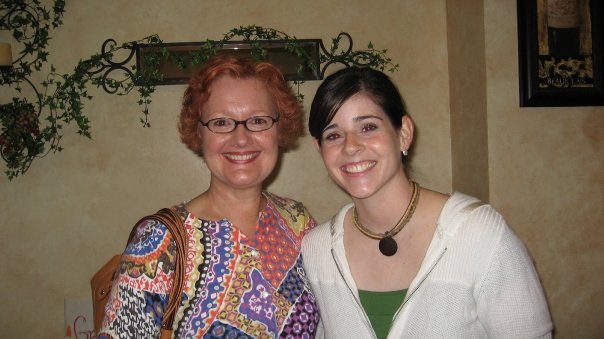
Val, one of my chemo nurses from many moons ago was on the phone. She wanted to make sure that I knew. Kim, one of my favorite nurses and people who I’ve grown the closest to, was killed in an auto accident last week. She knew that I would want to know.
My stomach dropped.
Kim?
I had just seen her a few weeks ago. We talked for over an hour in her office. She had recently remarried and was showing me photos, a beaming new bride. I talked about the church, my family and my health status. She listened intently, as if my updates about family and life were a bestselling novel to her. She was so proud of me. She made me feel so special.
Kim was the nurse who saw me as more than just a 17-year-old patient who walked into the chemo room with a strange case of colon cancer. Don’t get me wrong, all of my chemo nurses were angels and treated me with the utmost care. But Kim and I had a special bond. She comforted me after I was told I’d lose my hair, and in a way that only she could have pulled off, slipped me wig brochures “just in case.” When I was complaining about being a teenager with cancer and asking what I could get out of it, she did some research and told me about the American Cancer Society’s Young Cancer Survivor’s Scholarship, a program which ended up helping pay over $3000 toward my college. She always told me I looked beautiful, even on the days when I was pale and hardly able to walk. She came to my wedding. She would even sneak little goodies into my bag of chemo brochures. I still have the “hope” basket she gave me near my bed.
I loved Kim. She was a bright spot that I always looked forward to when I returned to the oncology office. She was one of the cheeriest, most positive, loving people I’ve ever met. Even after she had breast cancer herself, she embraced life even more (and looked mighty cute with the surprising red, curly hair that grew back!) Her beaming smile, warm hugs and excited eyes couldn’t help but give all of us who knew her hope for our lives, and for all of us facing cancer.
Kim’s journey ended too soon. I was sad to hear of my friend and the trajedy. I wasn’t expecting to lose someone in this community to an accident rather than an illness. But it must have been her time. I know that one day, we will each have our time. But it doesn’t make it any easier.
Last time we were together, Kim & I talked about how God keeps us here for a reason, and takes us home when we’re we’ve accomplished our purpose. We talked about how to make it through suffering, and how to make the most of things once we are on the other side. Kim’s one of those people who I will forever credit to helping me make it to the other side with my battle with cancer. She gave me hope. She loved me. She inspired me. She made me feel beautiful. She helped me see that living my life and sharing my story is a huge accomplishment. She helped me muster up the courage to see tomorrow.
I think I was part of Kim’s purpose here on earth. I know I wouldn’t be the same without her. She’s helped me become who I am. And while tomorrow won’t have her with us, I’ll forever carry her with me. I will still smile. I will still give hugs. I will still have hope.
A Great Christmas Gift
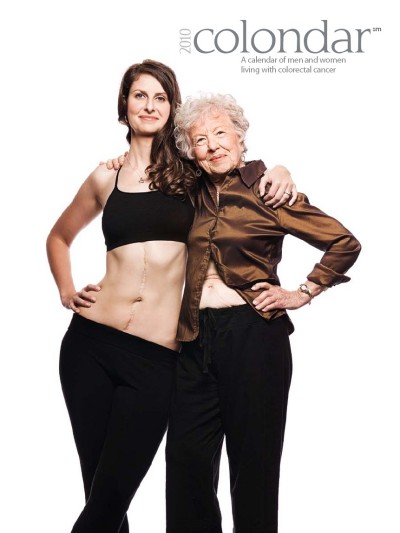
Anyone wondering what to get their favorite gassy girl? Got a cool colon-less chico you’re shopping for this year? Might I recommend the 2010 Colondar.
For anyone who’s been impacted by colon cancer, GI issues, IBS, Chron’s, colon surgery, frequent colonoscopies, or ulcerative colis – this is the gift for them. The annual calendar tells the stories of at least 13 colon cancer survivors who are surviving the disease and spreading hope. I was honored to serve as Miss October 09, and while I tend to be partial to the 2009 gang, I have to say the 2010 group seems incredibly awesome. They’re a good looking bunch too.
Gift a gift with a cause this year to your favorite colon pal and support the Colon Club. You won’t regret it.
A Semi-Colon Props for Hester
A semi-colon props goes out today to Bears football player Devin Hester. It takes guts to wake up the next day after something like this happens to you. I can’t imagine it on live TV. But now he knows how it feels to wake up and chat with your GI after a colonoscopy, and much less, become friends with him. Way to promote colon cancer awareness dude, and it’s not even March yet!

The Dairy Dilemma – Part 2
Sorry, folks! I am a triple-blog liar! But finally we have The Dairy Dilemma – Part 2.
(In case you are wondering, my bro’s colonoscopy was clean and clear! Yay for him!)
As I mentioned in The Dairy Dilemma – Part 1, dairy can be hard on the semi-colon’s sytem … and most people’s systems these days. I gave some tips that I’ve learned that have worked for me, and hopefully they’ll help you digest the yummy dairy goodness if you too cannot live without it.
The topic needed a second day because I’ve recently learned things about dairy that have made me very concerned! Once I decided I’d stick with dairy and learn how and what to eat, I became aware of an even bigger problem that affects all of us, not just semi-colons.
Mike’s aunt & uncle sent me a book this past summer called “An Unhealthy Truth” by Robin O’Brien. I dove into it a few months ago and came out as a wide-eyed and concerned consumer regarding what is in our food. In the book, O’Brien uncovers corruption between the FDA and many major food and pesticide corporations who are using genetically modified, synthetic or hormone-treated crops or livestock to make big bucks. I’m typically one who sits back to see if an issue is all “hype” or not – but when I learned that many other countries around world have banned the use of such products and hormones, I started to sense a problem. And for me, I was especially concerned with our dairy.
O’Brien explains, “Most of the nation’s leading dairy processors use milk from cows treated with the bovine growth hormone in at least some of it’s products… ” (p. 109) Bovine Growth Hormone (rBST or rBGH) is a chemical given to cows to make them “step up milk production.” And while this doesn’t seem like such a bad thing, it’s adverse effects on cows can make you wonder. O’Brien’s book says that:
“The product seems to be hazardous to the cows. The package itself warns of such bovine problems as increases in ‘cystic ovaries and disorders of the uterus,’ ‘decreases in gestation length and birth-weight of calves,’ and ‘increased risk of clinical mastitis’ ‘(a painful type of udder infection that causes cows to pump out bacteria and pus along with milk requiring treatment with antibiotics and other meds that can end up in the milk.” (p. 99)
Sorry to gross you out, but those simple truths made me very concerned. I am an individual with some sort of cancer-causing gene mutation, and so to hear that the majority of the food I’ve been eating is from genetically-modified, hormone-enhanced and possibly antiobiotic-laced cows or crops worries me. Especially when it’s pointed out that:
“90-percent of breast cancers being diagnosed today are being triggered by factors in our environment.” (p.102).
“IFG-1 has also been implicated in prostate and colon cancer.” (IGF-1 is a hormone that can be found in milk, and is found in rBGH milk up to 10 times more than the levels of natural milk, and possibly even twentyfold according to more recent studies.” “It’s been known for years that the particular hormone is linked with cancers (because of its effects) on the endocrine sysem,’ says Dr. Pompilio.(p. 102-103)
“According to CNN and a recent study published in the Journal of Allergy and Immunology, milk allergy is now the most common food allergy in the United States, having risen to the number one position in the last ten years.”(p. 100)
After reading the research and studies, I was ready to change. But the nail in the coffin for me was O’Brien’s statement about what the FDA is requiring, which to me, is so sickening because of the corruption and greed:
“If a dairy wanted to highlight the fact that its milk had NOT been made with rBGH (you know, for those of us who might have an interest in avoiding this potentially carcionogenic hormone), the FDA recommended it to also state on the label that there was no difference between the genetically altered hormone that Monsanto had developed (company manufacturing the rBGH) and the regular old bovine growth hormone that already occured in nature.” (p. 104)
And when I went to Kansas City’s beloved Shatto milk’s website. I saw that to be true – there was a small disclaimer on their homepage that although they were rBGH-free, there has been no proven difference. What a load of crap. Because of lawsuits that have favored the rBGH-making Monsanto, local dairies priding themselves for not using artificial growth hormones now have to tip-toe around just to share their story and safety with consumers.
So friends, here we are. I was overwhelmed after I read this. Mainly because 1) This is all that I’ve consumed my entire life. We didn’t know! 2) I cannot afford to go all-organic, and 3) This is too big for me!
But as I began to do some research and finish O’Brien’s book, I learned it was possible to do something! And while it’s not wise to jump in the cold pool all at once, baby steps into the water will help make the swim much easier. Here’s what I’ve done so far, and what I’d encourage you in if you’re concerned now too.
1. Read the book. It gave great advice about adopting an 80/20 policy so you don’t kill yourself over being totally hormone-free or organic. This has helped me tremendously, as I still buy regular butter and feel comfortable in restaurants and other’s homes. Dairy is just one of the foods she tackles too… read the book for the full scoop on many of our beloved brands.
2. I began researching safe brands in my area. O’Brien lists several safe brands and stores, but not many are close to me in the KC Metro area. For you who are local to KC, here are some brands that can be found in the area that are safe and rBGH-free. I’m sure this is not a comprehensive list. If you have any to add, leave a comment and let me know!
- Any Organic Products (to be labeled organic they have to be rBGH-free by definition). Hy-Vee, Target, Wal-Mart and many other stores are carrying organic lines of dairy, and some (like Hy-Vee) even have their own organic store brand.
- Wal-Mart’s “Great Value” milk (milk only, not cheese or other products at this time)
- Yoplait yogurt (sneakers, they started making rBGH-free this past August but are keeping it on the down-low.)
- Kraft’s 2% brand of cheese (only one at this time)
- Shatto Milk Company (milk can be found at Hy-Vee, Price Chopper, Nature’s Pantry)
- Ben & Jerry’s ice cream
- Starbucks’ milk – as a company they vow to not use rBGH milk (or preservatives in their cookies for that matter.)
- Chipotle – their food is hormone-free
- I believe I read that Cabot cheese is going rBGH-free due to consumer demand.
3. I told somebody. It all starts with passing along the info. If you’re concerned too – tell somebody. Maybe together we can turn this around and one day be a country in-line with Europe, Australia, Russia and even Africa and demand that our country can prioritize making dairy (and other foods for that matter) safe over profitable. I just wonder how many more of us will have to lose colons, breasts, lungs, prostates and other vital organs to cancer to get this point across. Even if the dairy dilemma didn’t cause it … it’s certainly not helping it.
 Semicolon Stories