Posts filed under ‘Everything Colon’
Fresh Connect
I’ve had a few requests to start blogging some additional info about the organic/local food movement and steps to take if you’re new to the whole idea but want to slowly break into it.
 One of the first, and easiest, steps I took after deciding that I wanted to eat “safer” foods was to sign up with Fresh Connect.
This is mainly for Kansas City-area residents so if you’re an out of town reader, I apologize. I’d encourage you to look around in your area for a food co-op, as many metropolitan cities have these. Also, a great way to get plugged into this movement is to become a Farmer’s Market shopper in a few months.
But for my KC readers, Fresh Connect has helped me effortlessly start eating healthier, safer foods. A “to-your-door” delivery service, they deliver fresh produce and meat to your home as often as you choose. You select the quantity and frequency and leave the rest up to them. It not only saves you time if you have a busy schedule like ours, but it makes you eat healthier because you’re stocking up on fresh fruits and veggies instead of prepacked junk found at the store. We’ve also enjoyed the variety of foods we’ve branched out to eat. Foods like cabbage, beets, squash, buffalo meat, among others have made their way onto our menu and we’re enjoying this nice change!
For our two-person family, we’re set up on a rotation to get a fruit & vegetable combo delivery two times/month. We also receive a delivery of meat the first week of each month. They have many options for food and deliveries that will fit any budget. We’ve chosen to devote around $100/month toward this food delivery. It’s cut down on our grocery spending too, as we now just pick up a few of the additional items every few weeks that help us prepare meals and lunches.
I know this isn’t for everyone, but if you’re serious about eating more local, safe food this is a great first step.
Check it out at www.freshconnectkc.com.
** Mention that I referred you, and we’ll both receive $5 off of a delivery!
Nurse Kim
 I thought it was strange when I missed three calls from my oncologist’s office this morning. There were not any messages, but I figured they would call back again. I was right, as I got the call just after lunch.
In the cancer community, a phone call can change everything. Especially when it comes from your oncologist’s office. Sometimes it’s bad news, other times it’s good. Today the call wasn’t anything that I expected.
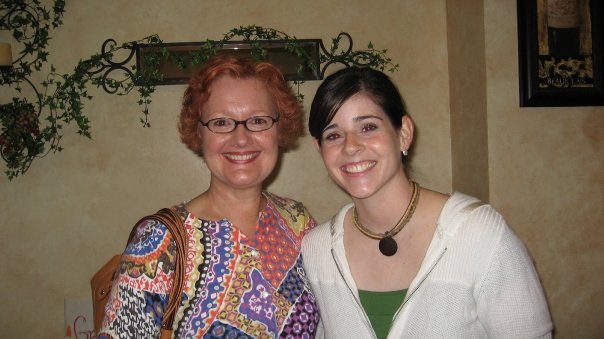
Val, one of my chemo nurses from many moons ago was on the phone. She wanted to make sure that I knew. Kim, one of my favorite nurses and people who I’ve grown the closest to, was killed in an auto accident last week. She knew that I would want to know.
My stomach dropped.
Kim?
I had just seen her a few weeks ago. We talked for over an hour in her office. She had recently remarried and was showing me photos, a beaming new bride. I talked about the church, my family and my health status. She listened intently, as if my updates about family and life were a bestselling novel to her. She was so proud of me. She made me feel so special.
Kim was the nurse who saw me as more than just a 17-year-old patient who walked into the chemo room with a strange case of colon cancer. Don’t get me wrong, all of my chemo nurses were angels and treated me with the utmost care. But Kim and I had a special bond. She comforted me after I was told I’d lose my hair, and in a way that only she could have pulled off, slipped me wig brochures “just in case.” When I was complaining about being a teenager with cancer and asking what I could get out of it, she did some research and told me about the American Cancer Society’s Young Cancer Survivor’s Scholarship, a program which ended up helping pay over $3000 toward my college. She always told me I looked beautiful, even on the days when I was pale and hardly able to walk. She came to my wedding. She would even sneak little goodies into my bag of chemo brochures. I still have the “hope” basket she gave me near my bed.
I loved Kim. She was a bright spot that I always looked forward to when I returned to the oncology office. She was one of the cheeriest, most positive, loving people I’ve ever met. Even after she had breast cancer herself, she embraced life even more (and looked mighty cute with the surprising red, curly hair that grew back!) Her beaming smile, warm hugs and excited eyes couldn’t help but give all of us who knew her hope for our lives, and for all of us facing cancer.
Kim’s journey ended too soon. I was sad to hear of my friend and the trajedy. I wasn’t expecting to lose someone in this community to an accident rather than an illness. But it must have been her time. I know that one day, we will each have our time. But it doesn’t make it any easier.
Last time we were together, Kim & I talked about how God keeps us here for a reason, and takes us home when we’re we’ve accomplished our purpose. We talked about how to make it through suffering, and how to make the most of things once we are on the other side. Kim’s one of those people who I will forever credit to helping me make it to the other side with my battle with cancer. She gave me hope. She loved me. She inspired me. She made me feel beautiful. She helped me see that living my life and sharing my story is a huge accomplishment. She helped me muster up the courage to see tomorrow.
I think I was part of Kim’s purpose here on earth. I know I wouldn’t be the same without her. She’s helped me become who I am. And while tomorrow won’t have her with us, I’ll forever carry her with me. I will still smile. I will still give hugs. I will still have hope.
A Great Christmas Gift
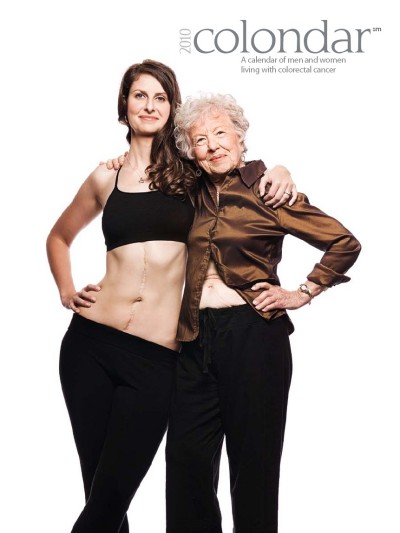
Anyone wondering what to get their favorite gassy girl? Got a cool colon-less chico you’re shopping for this year? Might I recommend the 2010 Colondar.
For anyone who’s been impacted by colon cancer, GI issues, IBS, Chron’s, colon surgery, frequent colonoscopies, or ulcerative colis – this is the gift for them. The annual calendar tells the stories of at least 13 colon cancer survivors who are surviving the disease and spreading hope. I was honored to serve as Miss October 09, and while I tend to be partial to the 2009 gang, I have to say the 2010 group seems incredibly awesome. They’re a good looking bunch too.
Gift a gift with a cause this year to your favorite colon pal and support the Colon Club. You won’t regret it.
The Dairy Dilemma – Part 2
Sorry, folks! I am a triple-blog liar! But finally we have The Dairy Dilemma – Part 2.
(In case you are wondering, my bro’s colonoscopy was clean and clear! Yay for him!)
As I mentioned in The Dairy Dilemma – Part 1, dairy can be hard on the semi-colon’s sytem … and most people’s systems these days. I gave some tips that I’ve learned that have worked for me, and hopefully they’ll help you digest the yummy dairy goodness if you too cannot live without it.
The topic needed a second day because I’ve recently learned things about dairy that have made me very concerned! Once I decided I’d stick with dairy and learn how and what to eat, I became aware of an even bigger problem that affects all of us, not just semi-colons.
Mike’s aunt & uncle sent me a book this past summer called “An Unhealthy Truth” by Robin O’Brien. I dove into it a few months ago and came out as a wide-eyed and concerned consumer regarding what is in our food. In the book, O’Brien uncovers corruption between the FDA and many major food and pesticide corporations who are using genetically modified, synthetic or hormone-treated crops or livestock to make big bucks. I’m typically one who sits back to see if an issue is all “hype” or not – but when I learned that many other countries around world have banned the use of such products and hormones, I started to sense a problem. And for me, I was especially concerned with our dairy.
O’Brien explains, “Most of the nation’s leading dairy processors use milk from cows treated with the bovine growth hormone in at least some of it’s products… ” (p. 109) Bovine Growth Hormone (rBST or rBGH) is a chemical given to cows to make them “step up milk production.” And while this doesn’t seem like such a bad thing, it’s adverse effects on cows can make you wonder. O’Brien’s book says that:
“The product seems to be hazardous to the cows. The package itself warns of such bovine problems as increases in ‘cystic ovaries and disorders of the uterus,’ ‘decreases in gestation length and birth-weight of calves,’ and ‘increased risk of clinical mastitis’ ‘(a painful type of udder infection that causes cows to pump out bacteria and pus along with milk requiring treatment with antibiotics and other meds that can end up in the milk.” (p. 99)
Sorry to gross you out, but those simple truths made me very concerned. I am an individual with some sort of cancer-causing gene mutation, and so to hear that the majority of the food I’ve been eating is from genetically-modified, hormone-enhanced and possibly antiobiotic-laced cows or crops worries me. Especially when it’s pointed out that:
“90-percent of breast cancers being diagnosed today are being triggered by factors in our environment.” (p.102).
“IFG-1 has also been implicated in prostate and colon cancer.” (IGF-1 is a hormone that can be found in milk, and is found in rBGH milk up to 10 times more than the levels of natural milk, and possibly even twentyfold according to more recent studies.” “It’s been known for years that the particular hormone is linked with cancers (because of its effects) on the endocrine sysem,’ says Dr. Pompilio.(p. 102-103)
“According to CNN and a recent study published in the Journal of Allergy and Immunology, milk allergy is now the most common food allergy in the United States, having risen to the number one position in the last ten years.”(p. 100)
After reading the research and studies, I was ready to change. But the nail in the coffin for me was O’Brien’s statement about what the FDA is requiring, which to me, is so sickening because of the corruption and greed:
“If a dairy wanted to highlight the fact that its milk had NOT been made with rBGH (you know, for those of us who might have an interest in avoiding this potentially carcionogenic hormone), the FDA recommended it to also state on the label that there was no difference between the genetically altered hormone that Monsanto had developed (company manufacturing the rBGH) and the regular old bovine growth hormone that already occured in nature.” (p. 104)
And when I went to Kansas City’s beloved Shatto milk’s website. I saw that to be true – there was a small disclaimer on their homepage that although they were rBGH-free, there has been no proven difference. What a load of crap. Because of lawsuits that have favored the rBGH-making Monsanto, local dairies priding themselves for not using artificial growth hormones now have to tip-toe around just to share their story and safety with consumers.
So friends, here we are. I was overwhelmed after I read this. Mainly because 1) This is all that I’ve consumed my entire life. We didn’t know! 2) I cannot afford to go all-organic, and 3) This is too big for me!
But as I began to do some research and finish O’Brien’s book, I learned it was possible to do something! And while it’s not wise to jump in the cold pool all at once, baby steps into the water will help make the swim much easier. Here’s what I’ve done so far, and what I’d encourage you in if you’re concerned now too.
1. Read the book. It gave great advice about adopting an 80/20 policy so you don’t kill yourself over being totally hormone-free or organic. This has helped me tremendously, as I still buy regular butter and feel comfortable in restaurants and other’s homes. Dairy is just one of the foods she tackles too… read the book for the full scoop on many of our beloved brands.
2. I began researching safe brands in my area. O’Brien lists several safe brands and stores, but not many are close to me in the KC Metro area. For you who are local to KC, here are some brands that can be found in the area that are safe and rBGH-free. I’m sure this is not a comprehensive list. If you have any to add, leave a comment and let me know!
- Any Organic Products (to be labeled organic they have to be rBGH-free by definition). Hy-Vee, Target, Wal-Mart and many other stores are carrying organic lines of dairy, and some (like Hy-Vee) even have their own organic store brand.
- Wal-Mart’s “Great Value” milk (milk only, not cheese or other products at this time)
- Yoplait yogurt (sneakers, they started making rBGH-free this past August but are keeping it on the down-low.)
- Kraft’s 2% brand of cheese (only one at this time)
- Shatto Milk Company (milk can be found at Hy-Vee, Price Chopper, Nature’s Pantry)
- Ben & Jerry’s ice cream
- Starbucks’ milk – as a company they vow to not use rBGH milk (or preservatives in their cookies for that matter.)
- Chipotle – their food is hormone-free
- I believe I read that Cabot cheese is going rBGH-free due to consumer demand.
3. I told somebody. It all starts with passing along the info. If you’re concerned too – tell somebody. Maybe together we can turn this around and one day be a country in-line with Europe, Australia, Russia and even Africa and demand that our country can prioritize making dairy (and other foods for that matter) safe over profitable. I just wonder how many more of us will have to lose colons, breasts, lungs, prostates and other vital organs to cancer to get this point across. Even if the dairy dilemma didn’t cause it … it’s certainly not helping it.
Colonoscopy Survival Kit
I am a blog liar. Dairy Dilemma- Part 2 today will come tomorrow.

Bro&Sis
Today, I am writing a post in honor of my brother who is getting a colonoscopy tomorrow.
Andy and I are less than 13 months apart. I know what you’re thinking and although my parents deny it every time, I still think he was an “oops” baby. They swear he was planned. And all of the parents who’ve had kids less than 15 months apart say: “riiiight.”
Anyway, my immediate family has been put on a “Cancer’s Most Wanted” list because of my crazy case of colon cancer. They’re all seen as high-risk. We’re in the process of genetic testing to help rule out some of those risks, but until then, they’re stuck with getting frequent colonoscopies. Sorry guys!
Although the nitty-gritties about a colonoscopy seem unbearable, it’s really not that bad. You’re not even awake during the test. They put you out, and you wake up minutes later remembering the lollipops and flying unicorns you dreamed about while the GI doc scanned your butt. You go home, sleep it off, and carry on your merry way.
The hardest part about a colonoscopy is the day of prep before. You cannot eat the day before your test, and then you clean out your colon later that evening. This can be a pretty unpleasant day, but after having over five colonoscopies over the past nine years or so, I’ve picked up a few tips along the way.
My Colonoscopy Survival Kit.
Read ’em and poop!
– A large pasta dinner the evening before your “clean out” day. This will help you not be starving when you wake up.
– Naked Juice. Beware of the red/pink flavors, as well as the thick smoothie varieties, but many of these juices not only give you 100% real fruit in a liquid form, but can help you feel full.
– Jello and Broth. The jello is thicker so it makes you feel like you’re chewing and eating something. The broth will also help curve your cravings better than juice.
– Flavored tea or Crystal Light. If you’re using the prep that must be mixed with a clear liquid (they often recommend lemon lime flavor) and you enjoy a Sprite or 7-up – don’t mix it with that. Go for something you can stand, but not prefer. I couldn’t drink Sprite for years after I learned this the hard way.
– Scott’s Flushable Wipes. Don’t worry, these are sold in the adults section. While it might seem embarrassing, I recommend their usage. After so many trips to the bathroom your rear can get raw. These help prevent that. Even if you don’t opt for these, at least don’t use cheap toilet paper. Go for the Charmin Soft on this night.
– A great magazine. Again, you’ll be hitting the pot a lot. Take something with short, small articles you can read and come back to over, and over, and over.
– A nightlight. Hopefully you’ll be done pooping by the time you go to bed, but just in case the midnight run comes along, it’s best not to fall and crack your head on the sink at 3am. Just get a nightlight so you can sit in the dark and not worry about the light.
The Dairy Dilemma – Part 1
It’s a horrible feeling. You head down the frozen foods aisle with the goal of finding mixed vegetables and all of the sudden the colorful, fun ice cream packages from across the aisle start chanting your name. Between the swirls, sprinkles, candy-covered shells and cookie dough balls it feels like if you don’t open up the glass door and add one to your cart – you’ll be missing out on the party of a lifetime. You start to entertain the thought as you realize they’ve added even more candy bar ice cream boxes to the shelf when you suddenly snap into reality, walk back across the aisle, locate the vegetables, fill up your cart, and get the heck out of aisle 13.
For many of us semi-colons, and actually a lot of lactose intolerants, it’s hard to not join the party. Dairy is so good! That creamy milk softening your cereal, the hot stringy cheese covering the pizza, or the yummy ice cream making summertime memories is hard to pass up. But it seems like even the average person is developing a strong love/hate relationship with dairy these days. My husband has recently discovered he’s lactose intolerant thanks to Pizza Hut, and it seems like half of the kids I know these days cannot digest regular milk.
As a semi-colon, I can relate to having “issues” with dairy. Many of them fall into everyday lactose intolerance symptoms: multiple bathroom trips, cramping, bloating, and Captain Uncomfortable: gas. But as I’ve had more and more colon removed, I’ve had one big additional side effect from dairy consumption: burning. I’m guessing the sensation can be similiar to grown-up diaper rash or just a hefty case of hemmoroids – but only while the dairy is in your GI tract. It seems to automatically go away once it’s in and out.
Despite all of these adverse effects, I’ve not vowed to give up dairy. I love a good bowl of cereal way too much. Plus, we live within walking distance to this great little ice cream shop named Poppy’s and I have to take advantage of it. So while I’ve not cut out all dairy from my diet, I have learned how to live with it’s side effects and actually skip over a few of them. Here are some tips that I’ve found while eating dairy as a semi-colon. I’ll even throw in a few ones for you lactose intolerants too while I’m at it:
Overall:
- Don’t overeat, and especially if you’re eating dairy. There’s something about packing your digestive system too full and then lacing dairy all the way through it that causes a nightmare. Try to have more of an empty stomach, or at least don’t be totally full, when eating dairy stuff. (or anything for that matter.)
- Eat starch with dairy. If you are going to go for the big bowl of ice cream, eat something carb-based first. This will help line your stomach and GI tract so that the dairy isn’t shocking it, and give your GI something softer and easier to digest first.
- For you lactose intolerants – Mike’s been using Lactaid tablets and taking one with his first bit of dairy-based foods. It’s helped a lot.
Milk tips:
- Drink skim or low-fat milk. The whole, 2% milk can really throw me for a loop – and a bad one.
- Speaking of lattes, I skip the whip and request the nonfat milk. The extra whipped cream on the top is unneeded calories and not worth it.
- Soymilk doesn’t necessarilly make this better. I tried it. Might work for some, but didn’t for me.
- Lactaid also makes a brand of milk for you guys who want to drink milk and are intolerant. I’m sure there are other brands coming out soon. There’s even lactose-free soy milk on the shelves.
Yogurt:
- Yogurt is a mystery. Maybe if I understood the chemistry of food better I would understand. But yogurt doesn’t really seem to bother me or Mike. I’ve even started going for the large tub of plain, vanilla yogurt and throwing cranberries into it. Oh so good. Mike’s a Yoplait fan and loves the berry flavors. It might give us a little bit of Captain Uncomfortable (gas), but no burning or bloating. Yay!
- One tip if you go for yogurt – go for the most natural kind you can. There’s something about the blue stuff in tubes that doesn’t seem quite right.
Cheese:
- Go easy on the cheese. I haven’t cut out cheese, but I opt-out of having cheese-dominated meals. This has been very hard because I love mac & cheese. I haven’t cut it out, just not made a meal out of it.
- On pasta, I’ve had to do the same. I do opt for the fresh parmesean on the dish, but have had to not order the entrees that come blanketed with a warm layer of melted cheese.
- One exception is pizza. I’ve started eating a lot of cheese pizza and it’s gone pretty well. I make sure to monitor the grease though and go for freshly-made pizzas when possible. The more saucy, tomato-based, the better (for me the semi-colon.) Here are a few locations places in the KC-area that have not given me any issues with their pizzas (so far): Waldo Pizza, Spin! Pizza (their margherita pizza is out of this world), The Dish (in Liberty)
- There is something about ricotta cheese that tears me up. Everytime. Just a warning for you.
Ice Cream:
- And last but not least: ice cream! Sometimes ice cream won’t be a problem, and other nights it’s a nightmare. Of course, frozen yogurt is always a healthier way to go.
- Watch what you put on your ice cream, or the type of flavor. For me, the more pure and simple, the better. I’m going to handle a vanilla cone much better than I will a dish of ice cream with candy, chocolate and nut toppings.
- I have found that ice cream is much easier to digest than custard.
So, those are a few tips for a consuming dairy as a semi-colon (or even dairy-sensitive person in general.) I know these won’t work and apply to everyone, but they’ve helped me and hopefully might be able to help you.
Can you relate? Leave a comment and tell us your own tips, or experiences with dairy, even if you’re not a semi-colon!
And stay tuned tomorrow for the Dairy Dilemma – Part 2 where I’ll share some research and facts I’ve learned about dairy that I think everyone needs to know.
 Semicolon Stories